
For podcasters searching for a lightweight audio interface, the ZOOM U-44 is a popular option. This handheld device weighs less than a pound, so you can capture on-site audio with a mic, your phone, and two AA batteries.
That said, the ZOOM U-44 isn’t a fit for everyone, and some podcasters find value in other alternatives. That’s why we’re breaking down everything you should know in this guide — so you can make the right decision for your podcast, team, or company. If you’re still weighing whether an audio interface is the right category for your setup, our guide to choosing an audio interface covers the key criteria to consider before you buy.
Let’s get started.
Table of Contents
- ZOOM U-44 at a glance
- ZOOM U-44 Features
- ZOOM U-44 Hardware
- How to use the ZOOM U-44
- Alternatives to the ZOOM U-44
- The Bottom Line on the ZOOM U-44
- Frequently Asked Questions
- What is the ZOOM U-44 audio interface used for?
- Does the ZOOM U-44 require a computer to work?
- Can the ZOOM U-44 power condenser microphones with phantom power?
- What microphone capsules work with the ZOOM U-44?
- How long does it take to set up the ZOOM U-44?
- What software comes with the ZOOM U-44?
- What are the best alternatives to the ZOOM U-44?
- Is the ZOOM U-44 good for recording interviews or multi-person podcasts?
ZOOM U-44 at a glance
What’s under the hood of the ZOOM U-44? We break down the key features below:
| Connection type | Sample Rates | Phantom Power | Inputs and Outputs | Included Items | Price |
| USB | 44.1 kHz, 48 kHz, 96 kHz, 88 kHz | +48 VDC (only available on 2 inputs, not the expansion port) | 4 inputs (2 XLR/TRRS combo jacks, 1 SPDIF optical or coaxial input,1 MIDI in) | N/A | $189.99 USD |
Keep reading for an in-depth breakdown of the ZOOM U-44’s features, benefits, and limitations.
ZOOM U-44 Features
The ZOOM U-44 is a compact 4-in/4-out audio interface with two mic preamps, dual combo inputs, and interchangeable capsule support, designed for music production, podcasting, and live streaming.
The ZOOM U-44 is a 4-in/4-out audio interface designed for music, podcasting, and live streaming. Although it’s not the largest audio interface on the market, it’s small, lightweight, and easy to transport on the field.
Here are the physical features of the ZOOM U-44:
- Two mic preamps: You can independently adjust the gain for both interface inputs.
- Two combo inputs: Each input has a multicolored level indicator to monitor audio levels easily. You can also mute each channel during live sessions for cleaner or clearer audio.
- Multiple output options: This includes a ¼” jack, RCA, and S/PDIF.
- Operation modes: You can choose between audio interface mode, S/PDIF, AD/DA converters, and more.
- High-impedance input: Input 1 comes with high impedance support so you can connect bases, guitars, and other musical instruments.
- Two MIDI I/O jacks: These allow you to synchronize your interface with keyboards, synthesizers, sampling modules, and similar devices.
- 10-pin connector: You can mix and match interchangeable input capsules (or mics) such as mid-side, shock mount, shotgun, and more.
- One headphone connector: You can listen to mix while actively capturing audio and adjust your headphone volume directly on the interface.
- iPhone or iPad hookup: This is especially useful with audio editing tools such as GarageBand or Logic Pro X.
- Balancing knob: You can quickly create a balance between your click track and main out signals by turning the dial while live streaming.
ZOOM U-44 Pros
- The U-44 is compatible with ZOOM’s interchangeable input capsules, which allow you to mix and match microphones depending on your recording needs.
- If BUS power isn’t available, you can power the ZOOM U-44 with just two AA batteries. This is a major benefit when making field recordings (or if you don’t have access to other devices).
- The ZOOM U-44 has a competitive price point. It’s $10 USD less than the PreSonus Revelator io24 and more than $200 USD less than the TASCAM Mixcast 4. The Focusrite Vocaster interfaces are another podcast-focused option in a similar price range.
ZOOM U-44 Cons
- You can only activate phantom power on two specific outputs and not through the interface’s expansion port—this may not be an issue if you use dynamic mics to record. Still, it may be a significant limitation if you need condenser microphones on all three inputs.
- The U-44 once came with free software like Pro Tools First, Ableton Live 9 Lite, and Steinberg Cubasis LE. Now that you cannot purchase the interface directly from Zoom, you may not get all these extras in the same package.
- While the U-44 can function as a mixer, it isn’t what ZOOM intended for users. If you’re looking for an interface that can function as a mixer, you can read our complete guide to podcast mixers.
- You cannot use the ZOOM U-44 to actively record audio. You’ll need to purchase additional software to capture field audio on your device.

ZOOM U-44 Hardware
The ZOOM U-44 is a USB audio interface no longer sold directly by ZOOM but available through third-party retailers. Each purchase includes the unit, a USB cable, an operation manual, and an Ableton Live 9 Lite download code.
With every purchase, you get:
- The ZOOM U-44 itself
- U-44 operation manual
- A USB cable
- Ableton Live 9 Lite software download code
You still need to purchase your podcast headphones separately, as well as ZOOM’s interchangeable podcast microphones (if you want to take advantage of its 10-pin connector). If you’d rather source microphones, headphones, and cables together in one purchase, a podcast equipment bundle can simplify the process.
For the U-44, ZOOM suggests the following capsules:
- XYH-5 Mic Capsule Shock Mounted Stereo Microphone
- SGH-6 Shotgun Microphone Capsule
- SSH-6 Stereo Shotgun Microphone
- EXH-6 Dual XLR/TRS Microphone
- MSH-6 Mid-Side Microphone
How to use the ZOOM U-44
The ZOOM U-44 is a plug-and-play audio interface that requires no prior experience. Power it via batteries or USB bus power, connect it to your device, and you can be set up in 15 minutes or less.
If you’re also building a dedicated recording space around it, our guide to setting up a podcast studio covers room acoustics and gear placement.
7 steps to Get Started with the ZOOM U-44:
- Add power to your ZOOM U-44. To do this, you can either connect your ZOOM U-44 to your device of choice (this could be a laptop, an iPad, or your iPhone) or insert two AA batteries into the back of the device.
- Connect your microphone(s) and adjust the gain to zero.
- Connect your headphones (sold separately). Slowly turn the gain up as you speak into the microphone, taking care to adjust your headphones’ volume as well.
- Use your download code to access Ableton Live 9 Lite. If your box doesn’t come with editing software, you can check out our guide to podcast editing software.
- Adjust the input/output balance until you’re satisfied with your mix.
- Ensure there are no pops, hisses, or other audio interferences.
- Once you press record in your podcast editing software, you can capture, polish, and promote your new podcast.
Do you work better with visual guides? Check out the step-by-step tutorial below:
Alternatives to the ZOOM U-44
The top alternatives to the ZOOM U-44 include the ZOOM PodTrak P4, PodTrak P8, RØDECaster Pro 2, TASCAM Mixcast 4, PreSonus Revelator io24, and Maonocaster, each suited to different budgets and recording setups.
ZOOM PodTrak P4

If you like the handheld nature of the ZOOM U-44, consider the PodTrak P4. This portable interface features four XLR connectors and four headphone outputs, which makes it a more efficient option for four-person podcast sessions.
The PodTrak P4 starts at $149 USD, which makes it 22% cheaper than the ZOOM U-44. However, you should know this recording device doesn’t come with additional software, which you may be able to get with the U-44 (depending on your vendor).
For more information, check out our guide to the PodTrak P4.
ZOOM PodTrak P8

Not to be confused with the PodTrak P4, the PodTrak P8 doubles as a mixer and an audio interface. You can access six XLR mic inputs, phantom power for condenser mics, and even built-in tools for recording and editing purposes.
As you can imagine, this doesn’t come cheap — the PodTrak P8 starts at $549.99 USD. It’s too heavy for most in-field recording purposes, so if you need a lightweight tool, you’re better off looking for a PodTrak P8 alternative.
You can learn more about this in our guide to the ZOOM PodTrak P8.
RØDECaster Pro 2
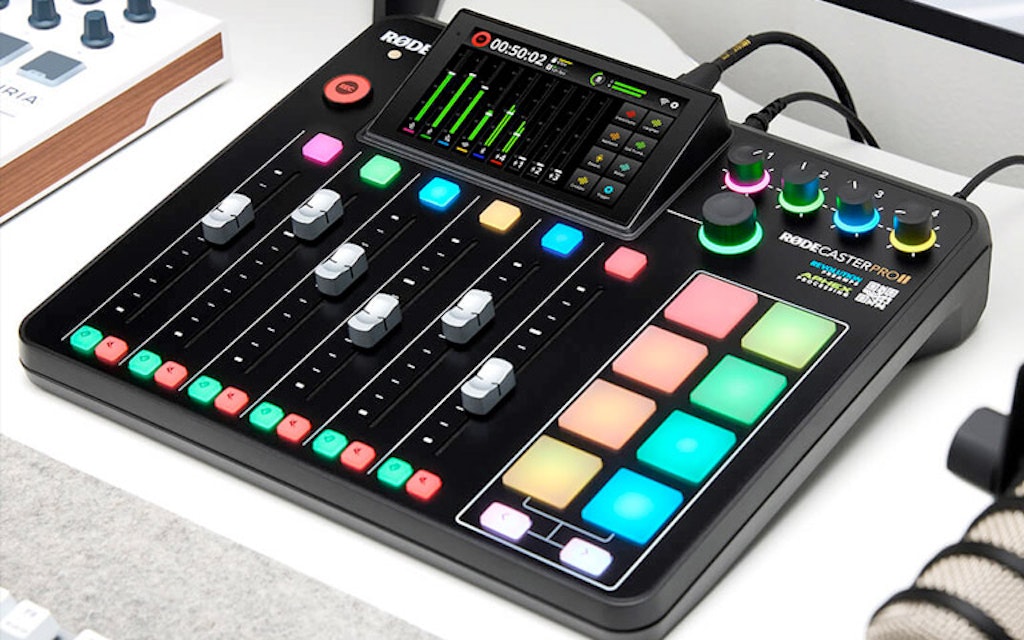
If budget isn’t an issue for your podcasting needs, you may want to consider the RØDECaster Pro 2. Users say it’s the penultimate device for capturing, editing, and mixing audio, although it starts at a hefty $699.00 USD.
You can virtually do it all with the RØDECaster Pro 2, especially if you connect to the RØDE Central companion app. Just keep in mind it doesn’t serve the same function as the ZOOM U-44, since this device is for desktop recording studios (and not for in-field audio).
You can read our guide to the RØDECaster Pro 2 to learn more.
TASCAM Mixcast 4

The TASCAM Mixcast 4 is a digital podcast workstation, which means it functions as a mixer, an audio recorder, and an editing tool. You get four mic inputs for every member of your podcast, plus a mix minus feature to host call-ins and virtual guests.
The most significant limitation of the Mixcast 4 is its built-in podcast editor, which despite the touchscreen capability, is limited at best. It might be quicker and more efficient to use dedicated podcast editing software, or outsource finished takes to a professional podcasting company instead.
We explain everything else you need to know in our guide to the TASCAM Mixcast 4.
PreSonus Revelator io24

If you’re more comfortable with a strict audio interface, the PreSonus Revelator io24 is a no-frills option. It also comes with editing software that’s comparable to the ZOOM U-44, including Studio One Artist, Studio Magic Suite, and Ableton Live Lite.
You can use the io24 for recording and live streaming, which offers additional flexibility depending on your audio needs. You should know, however, that it wasn’t designed for portability, and you’ll need to keep it on your desktop to maximize your audio quality.
Get all these details and several more in our review of the PreSonus Revelator io24.

Maonocaster

There are two types of Maonocaster interfaces: the E2, and the Lite. Both of these devices come with two basic inputs, at least one headphone output, and noise reduction tools.
Both types of Maono devices offer decent features, but they’re not as robust as all-in-one audio workstations. Just keep in mind you can’t beat the price — both Maono devices fall under $200 USD.
Could the Maonocaster be a better alternative for your needs? We break down all the details in our guide to Maono equipment bundles.
The Bottom Line on the ZOOM U-44
The ZOOM U-44 is a portable, battery-powered audio interface built for podcasters who want a simple, flexible recording setup without complex software or a permanent studio.
The ZOOM U-44 is a simple handheld device for podcasters on the go. All you need are batteries and a microphone, and you can start recording with the software you already own. For shows that include a video component, pairing the U-44 with a quality podcast camera rounds out the production setup.
Just remember the ZOOM U-44 is just one small part of the podcasting ecosystem, and there are additional tools you need to get started. This includes production services, video editing, and even social media assets — which the team at The Podcast Consultant would be happy to provide.
Curious to learn more about the services we offer? You’re welcome to learn more by booking a discovery call today.
Frequently Asked Questions
What is the ZOOM U-44 audio interface used for?
The ZOOM U-44 is a compact, handheld audio interface built for podcasting, music recording, and live streaming. It supports up to four inputs and four outputs, making it flexible enough for solo creators and small teams. Its lightweight design and battery-powered operation make it especially useful for field recording.
Does the ZOOM U-44 require a computer to work?
No, the ZOOM U-44 can run on two AA batteries, so you don’t need a computer or USB power source to use it. You can connect it to a laptop, iPad, or iPhone depending on your setup. That said, you will need separate recording software to actually capture audio.
Can the ZOOM U-44 power condenser microphones with phantom power?
The U-44 does offer 48V phantom power, but only on two of its inputs. If you plan to use condenser microphones on all inputs simultaneously, this will limit your setup. Podcasters who rely exclusively on dynamic mics are unlikely to run into this issue.
What microphone capsules work with the ZOOM U-44?
The U-44 features a 10-pin connector that is compatible with ZOOM’s interchangeable input capsules. Compatible options include the XYH-5 stereo mic, SGH-6 shotgun mic, SSH-6 stereo shotgun, EXH-6 dual XLR/TRS, and the MSH-6 mid-side microphone. This system gives you flexibility to swap mics based on your recording environment.
How long does it take to set up the ZOOM U-44?
The U-44 is a plug-and-play device, so you can have it up and running in 15 minutes or less. You add power, connect your microphone, plug in your headphones, and gradually adjust the gain until your levels sound right. No prior audio engineering experience is required.
What software comes with the ZOOM U-44?
The U-44 has historically been bundled with Ableton Live 9 Lite as a download code, and earlier packages sometimes included Pro Tools First and Steinberg Cubasis LE. Because availability may vary by retailer, it is worth confirming what software is included before you buy.
What are the best alternatives to the ZOOM U-44?
If you want a more portable podcasting option, the ZOOM PodTrak P4 is a cheaper pick with four XLR inputs. For a desktop-focused setup with more power, the PreSonus Revelator io24 or RØDECaster Pro 2 are strong contenders. Your best choice depends on whether you prioritize portability, input count, or built-in editing features.
Is the ZOOM U-44 good for recording interviews or multi-person podcasts?
The U-44 can handle two microphone inputs at once, which works fine for a host-and-guest format. If you regularly record with three or four people in the room, you may find its input count limiting. In that case, the ZOOM PodTrak P4 or PodTrak P8 would give you more headphone outputs and mic channels to work with.