
In the world of business podcasting, good mixing equipment is key. If you’re looking to upgrade your existing lineup, you may be considering the Maonocaster Lite.
Maono is a newer company and less recognized than TASCAM or ZOOM. However, many of its mixers — including the Maonocaster E2 — have become a favorite among podcast professionals. See how the Maonocaster Lite stacks up against the best podcast mixers on the market in our comprehensive guide.
Picking the best podcast mixer is about your specific needs. That’s why we’ll use this article to review the Maonocaster Lite and cover its features, hardware, and alternatives so you can make the best decision for your business to improve your podcast’s performance.
Let’s get started.
Table of Contents
- Maonocaster Lite at a glance
- Maonocaster Lite features
- Maonocaster Lite hardware
- How to use the Maonocaster Lite
- Maonocaster E2 vs. Maonocaster Lite
- Alternatives to the Maonocaster Lite
- ZOOM PodTrak P8
- The Bottom Line on the Maonocaster Lite
- Frequently Asked Questions
- What is the Maonocaster Lite and who is it best for?
- Does the Maonocaster Lite work with XLR microphones?
- Does the Maonocaster Lite have phantom power?
- Can the Maonocaster Lite record audio on its own without a computer or phone?
- How do the soundpad buttons work on the Maonocaster Lite?
- What is the difference between the Maonocaster Lite and the Maonocaster E2?
- Can you use Bluetooth with the Maonocaster Lite?
- How long does the Maonocaster Lite battery last?
- What are the main drawbacks of the Maonocaster Lite?
Maonocaster Lite at a glance
What does the Maonocaster Lite offer? Check out its key features in the chart below.
| Recording Media | USB Connector | Sampling Rate | Recording Format | Inputs and Outputs | Included Items | Price |
| Not compatible with SD cards – requires a direct connection to your laptop, tablet, phone, or desktop | USB Type-C | 48kHz / 16bit | 24-bit / 48kHz WAV | 2 channels in, 4 channels out | Condenser microphone, mic cable, mic tripod, windscreen muff, audio interface, charging cable, user manual, 3.5 mm TRRS audio cables (2) | $79.99 USD |
We discuss the Maonocaster Lite’s features below.

Maonocaster Lite features
The Maonocaster Lite (AM200) is a compact audio mixing and sampling interface with two 3.5mm condenser mic inputs, bundled accessories, and a lower price point than the full Maonocaster E2.
The Maonocaster Lite, also referred to as the AM200, is an audio interface for mixing and sampling. It’s a more condensed version of the Maonocaster E2, although it offers many of the same basic features (more on this below).
The Maonocaster Lite interface includes:
- Two mic inputs: You have two 3.5 mm jacks for condenser microphones. There are no XLR connectors like you’d see on the Maonocaster E2.
- One headphone jack: Although you can’t use anything with USBs, you can connect podcast headphones or earbuds to the 3.5 mm jack. Keep in mind this mixer package doesn’t come with earbuds like the Maonocaster E2.
- Six audio effect buttons: You can use these special effects for tasks like removing the lyrics from background music (or denoising the sounds created by the machine). Other buttons for pitch and side chaining let you adjust your audio to create a unique sound.
- 12 sound pad buttons: Eight buttons come with pre-recorded audio for opening music, applause, and more. There are also four ‘blank’ buttons you can use to capture and play whatever audio you want.
- Two crossfaders: One slider controls echo level, while the other controls monitor volume. Keep in mind you can’t control your microphones independently.
- Four top knobs: The first three adjust the low, mids, and highs of your audio. The last knob adjusts the volume of your recording.
- Two side knobs: The one on the right adjusts your microphone volume. The one on the left adjusts your music volume.
- Electron: Electron is essentially autotune with 12 steps ranging from A to E flat. This is especially helpful if you’re playing music live.
- Bluetooth connection: You can connect your phone via Bluetooth to play background music for your podcast. Please note you can’t use this to host call-ins on your mixer.
- Lights off: You can tap the light bulb symbol on the back of the mixer to dim the interface lights. You have six different levels of brightness to choose from.
Maonocaster Lite pros
- Each bundle comes with a microphone, tripod, and windscreen.
- The Maonocaster Lite is one of the lowest-cost professional mixers on the market.
- You can record custom audio using the Bluetooth connection.
- The mixer has an eight-hour battery life for remote use.
- The layout and interface are extremely intuitive, enabling faster setup.
- Your mixer has a 12-month warranty and 30-day money back guarantee (with stipulations).
Maonocaster Lite cons
- This mixer doesn’t support USB microphones.
- There is no phantom power.
- Maono admits the audio quality may not match that of a professional DJ mixer.
- The company states Maonocaster Lite is not always compatible with digital connections (primarily due to updates with iOS and Android systems).
- If your phone does not have a 3.5mm jack, you need an OTG adapter. This adapter is not included in the Maonocaster Lite bundle and must be purchased separately.
- Eight of the 12 soundpad buttons aren’t customizable, which may be frustrating if you want to make your podcast stand out.
- You have to record or stream directly on your laptop or phone. Unlike the TASCAM Mixcast 4 or the ZOOM PodTrak P8, you can’t capture audio directly on-mixer.
Maonocaster Lite hardware
The Maonocaster Lite ships as a ready-to-record kit, condenser microphone, cable, tripod, and windscreen included, at roughly one-fifth the price of comparable podcast mixers.
The Maonocaster Lite comes with several accessories so you can start recording fast. It’s also one fifth the cost of other podcast mixers, which makes it both economical and affordable. For comparison with other all-in-one starter kits, see our podcast equipment bundles guide.
Every box contains:
- Your Maonocaster Lite
- One condenser microphone (AU-PM360TR)
- One microphone cable
- One microphone mic tripod
- One windscreen muff
- One A USB A-C charging cable
- Two 3.5 mm TRRS audio cables
- Your user manual
- Your 12-month warranty
Some buyers purchase additional podcast accessories like:
How to use the Maonocaster Lite
Setting up the Maonocaster Lite takes only a few minutes. Connect a phone or computer, assemble the microphone with its tripod and muff, and follow the 16-step process to start recording audio.
Setting up your Maonocaster Lite is simple
- Construct your microphone with the tripod and muff. Although this is probably self-explanatory, you can always refer to your manual for more details.
- Connect your microphone to the mixer.
- Turn your mixer’s volume knobs to zero.
- Power the device on. Adjust brightness if needed using the button at the back of your mixer.
- It’s time to connect your recording device. If you’re using a computer, plug your USB-C adapter into the mixer. Then, connect line number two.
- If you’re using a phone, connect your 3.5mm cable to your phone jack. If you don’t have one, you need an OTG adapter.
- Ensure your device is accepting AU-AM200 as both an input and output.
- Use the test function to see if your device can ‘hear’ audio from your microphone.
- Adjust your volume.
- Adjust your low, mid, and high knobs.
- To record custom audio on your soundpad buttons, pull up the music or sound you want to record on your phone or computer.
- Hold one of the custom keys until a light starts flashing.
- Release the button to end your recording.
- You can clear the sound at any time by pressing the same soundpad button for two seconds.
- Pull up your device’s podcast recording software (such as Adobe Audition).
- Press the record button in your recording software. You’re ready to record your podcast.
Remember that the user manual is always available if you need additional guidance.
Maonocaster E2 vs. Maonocaster Lite
The Maonocaster E2 and Maonocaster Lite differ mainly in phantom power and microphone compatibility, the E2 includes phantom power and supports a wider range of microphones than the Lite.
The Maonocaster E2 and the Maonocaster Lite look similar on the surface. However, these two mixers have several differences you should know about.
These include:
- Phantom power: Only the Maonocaster E2 has phantom power.
- Microphone compatibility: The Maonocaster Lite is only compatible with 3.5 mm microphones. The Maonocaster E2 accommodates one 3.5 mm microphone and one XLR microphone.
- Soundpad: The Maonocaster E2 has 11 customizable soundpad buttons and no pre-recorded audio. In contrast, the Maonocaster Lite has 12 soundpad buttons, including eight with non-editable sounds.
- Outputs: There are three USB-C outputs with the Maonocaster Lite. There are only two with the Maonocaster E2.
Here’s what this looks like when compared side by side:
Alternatives to the Maonocaster Lite
The top alternatives to the Maonocaster Lite are the Maonocaster E2 (more inputs, phantom power, higher price) and the TASCAM Mixcast 4 (touchscreen display, four mic inputs, built-in SD card recording).
Maonocaster E2

As mentioned earlier, the Maonocaster E2 is a more robust version than the Maonocaster Lite. You get a different microphone, four more customizable soundpad buttons, and phantom power for various microphones. Just keep in mind it’s more expensive than the Lite, and it may be harder to set up depending on your experience.
You can read our entire guide to the Maonocaster E2 here.
TASCAM Mixcast 4
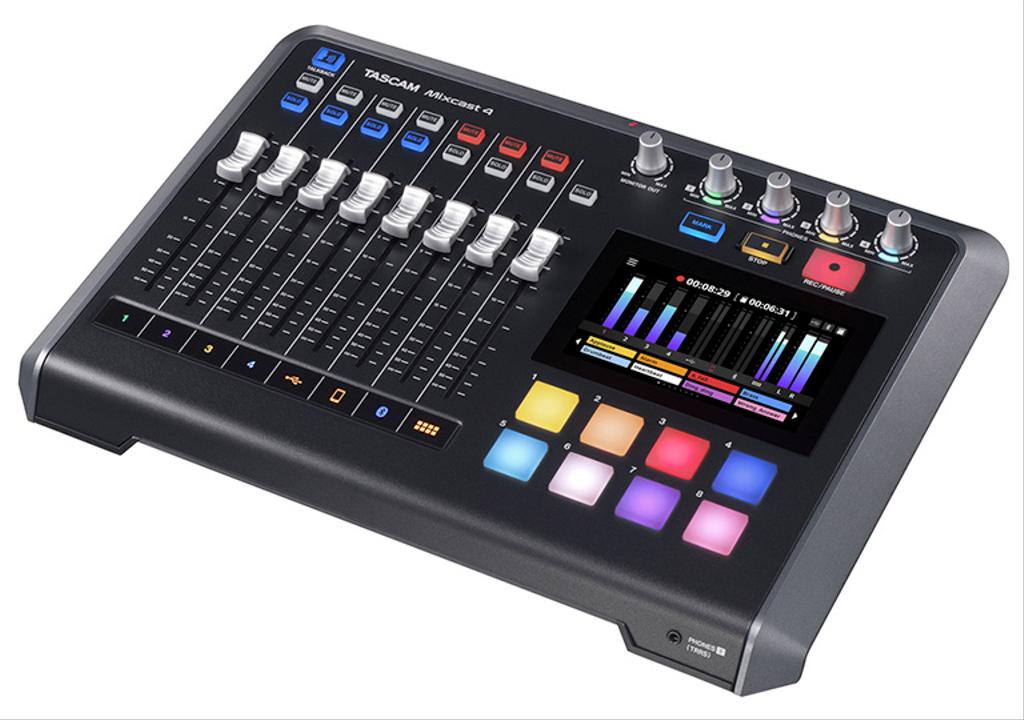
The TASCAM Mixcast 4 not only mixes your audio, but directly records it to an SD card for transport and editing. Note the intuitive touchscreen display, which can help you make on-mixer audio adjustments. With a total of four mic inputs, you can also host double the number of guests on your podcast.
We wrote a full guide to the TASCAM Mixcast 4 if you’re interested in learning more.
ZOOM PodTrak P8
The ZOOM PodTrak P8 offers four mic inputs, a call-in channel, a touchscreen, and on-device audio editing, making it a feature-rich but premium-priced podcasting mixer.
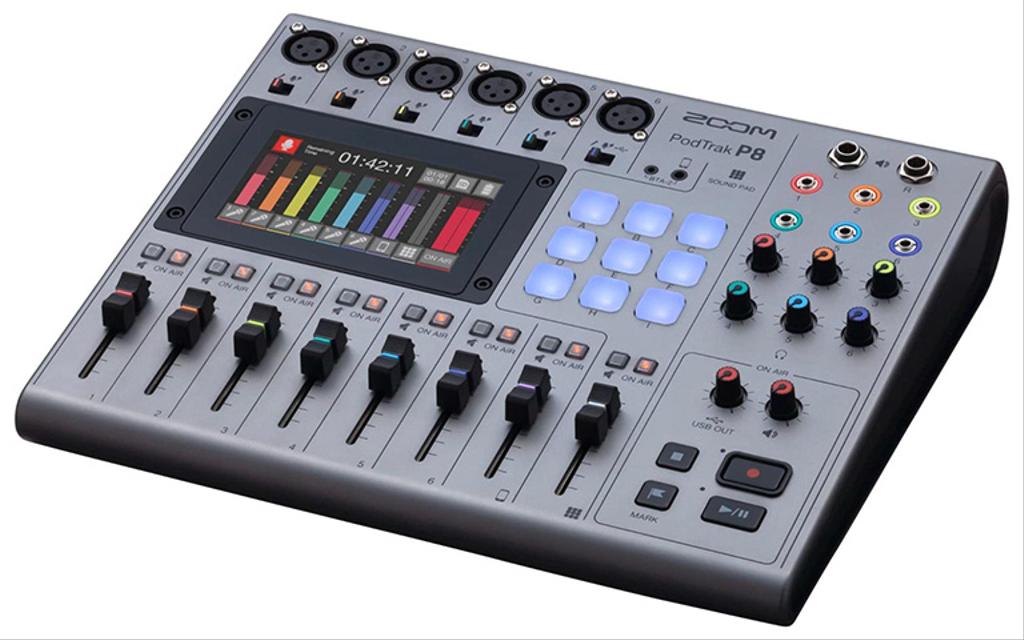
The ZOOM PodTrak P8 comes with four mic inputs plus an additional channel for call-ins. This mixer also comes with a touchscreen, as well as the ability to edit audio directly on-device. Just keep in mind this convenience comes at a price — the ZOOM PodTrak P8 is one of the most expensive mixers we recommend.
That said, you should know we recommend this mixer for good reason. You can see why in our comprehensive guide.

The Bottom Line on the Maonocaster Lite
The Maonocaster Lite is a capable, compact mixer well suited to podcasters who want to livestream their content across multiple platforms from any recording environment.
The Maonocaster Lite is an excellent mixer for podcasters looking to livestream their content — whether from a home desk or a dedicated podcast studio. Since you can stream your show on up to four different devices, you can establish a presence wherever your customers are. For shows adding video, see our podcast camera guide for setups that complement the Lite’s compact footprint.
If you want to show up on the right channel at the right time, you can check out our blog post on how to best promote your podcasts. The Podcast Consultant can also help you audit existing podcasts to identify possibilities and opportunities. We also assist with producing audio so you can publish new episodes with consistency.
Want to speak with a member of our team? Just book a Discovery Call here.
Related Articles:
- RØDECaster Pro 2: An audio production solution to do it all
- Ultimate Guide to Podcast Equipment in 2025
- PodTrak P4: ZOOM’s Ultimate Recorder for Podcasting
- Mackie ProFX: 2-Channel Professional Analog Mixer with USB
- Behringer XENYX: A simple mixer for live portable sound
- The Podcast Mixer: A Comprehensive Guide
- Audio Interfaces: The Key to Great Podcast Sound
- Podcast Audio Interfaces: A Comprehensive Guide
- PreSonus StudioLive AR8: A podcast mixer you should know
Frequently Asked Questions
What is the Maonocaster Lite and who is it best for?
The Maonocaster Lite is an ultra-budget USB audio mixer designed for beginner podcasters who want an affordable, all-in-one starting point. It comes bundled with a condenser microphone, tripod, and accessories so you can start recording almost immediately. It works best for solo or two-person shows streamed or recorded through a phone or computer.
Does the Maonocaster Lite work with XLR microphones?
No, the Maonocaster Lite only supports 3.5mm condenser microphones, there are no XLR inputs on this mixer. If you want XLR compatibility, you would need to step up to the Maonocaster E2, which accommodates one XLR and one 3.5mm microphone. It also does not support USB microphones.
Does the Maonocaster Lite have phantom power?
No, the Maonocaster Lite does not include phantom power. This is one of the key differences between it and the Maonocaster E2, which does offer phantom power. If your microphone setup requires phantom power, this mixer is not the right fit.
Can the Maonocaster Lite record audio on its own without a computer or phone?
No, the Maonocaster Lite cannot record audio directly on the device. You must connect it to a laptop, desktop, tablet, or smartphone and use recording software on that device to capture your audio. This sets it apart from mixers like the TASCAM Mixcast 4, which records directly to an SD card.
How do the soundpad buttons work on the Maonocaster Lite?
The Maonocaster Lite has 12 soundpad buttons in total. Eight come pre-loaded with sounds like applause and intro music that cannot be changed, while the remaining four can be customized with your own audio. To record a custom sound, you hold the blank button until a light flashes, play your audio from a connected device, then release the button when done.
What is the difference between the Maonocaster Lite and the Maonocaster E2?
The Maonocaster E2 is a more advanced version that adds phantom power, an XLR microphone input, and 11 fully customizable soundpad buttons. The Maonocaster Lite is more affordable and beginner-friendly but trades those features for a simpler layout and a lower price point. If you are just starting out, the Lite is easier to set up, but the E2 gives you more flexibility as your podcast grows.
Can you use Bluetooth with the Maonocaster Lite?
Yes, you can connect your phone via Bluetooth to stream background music through the mixer. However, the Bluetooth connection cannot be used to bring in remote callers or guests, it is strictly for audio playback. For call-in functionality, you would need a more advanced mixer like the ZOOM PodTrak P8.
How long does the Maonocaster Lite battery last?
The Maonocaster Lite has an eight-hour battery life, which makes it usable away from a power outlet for mobile or on-location recording. Keep in mind you still need a phone or computer connected to actually capture your audio. This portability is a notable advantage for the price.
What are the main drawbacks of the Maonocaster Lite?
The biggest limitations are the lack of phantom power, no XLR inputs, and no on-device recording, you must rely on a connected phone or computer to capture audio. Independent microphone volume control is also not available, so both mic channels share the same level adjustment. Audio quality also may not match that of a dedicated professional mixer, which is worth considering if your show has high production standards.