
Thinking about using Descript to edit your podcast? Maybe you’re looking for a hands-off editing tool, or maybe you’re curious about tapping into AI. Either way, you need to know if this podcast editing software has what it takes to support your show.
This guide covers everything you should know about using Descript for podcast editing, including its prices, features, and limitations. It also covers some editing resources, pros and cons, and possible alternatives, especially if you’re curious about other podcast editing platforms.
Table of Contents
- Introduction to Descript
- Why Choose Descript for Podcast Editing?
- Descript Features
- Descript: Pros and Cons
- Podcast Editing with Descript: Step-by-Step
- Alternatives to Descript
- The Bottom Line on Descript
- Frequently Asked Questions
- Is Descript good for podcast editing?
- How does text-based editing work in Descript?
- What AI features does Descript offer for podcasters?
- How much does Descript cost for podcasting?
- What are the biggest limitations of Descript podcasting?
- Can you record podcast guests remotely through Descript?
- Does Descript work for video podcast editing too?
- What are the best alternatives to Descript for podcast editing?
Introduction to Descript
Here’s what you should know about Descript at a glance:
| Audio Tracks | Sound Effects | Instruments | Remote recording | Free plan | Multitrack recording |
| Unlimited (called sequences) | 14 | ❌ | ✔️ (up to 10 people locally) | ✔️ (unlimited) | ✔️ |
Keep reading to get a more comprehensive breakdown.
Why Choose Descript for Podcast Editing?
Descript is a text-based audio and video editor trusted by around six million users. The descript podcast editing workflow lets you edit audio by editing a transcript, with multitrack editing, remote recording, and AI tools included.
You’ll have access to basic editing tools with Descript:
- Audio transcriptions
- Remote recording
- Multitrack editing
As well as several unique features:
- Video editing
- Highlight clips
- AI features
- Text-based editing
We’ll take a closer look at these features below.
But first, a quick look at the pricing.
Descript Pricing
Descript offers five separate plans: Free, Hobbyist, Creator, Business, and Enterprise. Each plan offers similar features, although the amount of time you’ll have to use them depends on the plan you purchase.
Here’s a quick breakdown of the major differences:
| Free | Hobbyist | Creator | Business | Enterprise | |
| Price | $0 user/month | $12 user/month | $24 user/month | $40 user/month | Contact for quote |
| Transcription hours | 1 hour/month | 10 hours/month | 30 hours/month | 40 hours/month | 45 hours/month |
| AI assistant | 5 uses/month | 20 uses/month | Unlimited | Unlimited | Contact for quote |
| AI speech | 5 minutes/month | 30 minutes/month | 120 minutes/month | 300 minutes/month | Contact for quote |
| Remote recording | 1 hour/month | 10 hours/month | 30 hours/month | 40 hours/month | Contact for quote |
| Integrations | 1 | 2 | Unlimited | Unlimited | Unlimited |
| Cloud storage limit | 5GB | 100GB | 1TB | 5TB | Contact for quote |
| Video export/publish resolution | 720p | 1080p | 4K | 4K | Contact for quote |
If you want 1:1 onboarding, priority support, and more than 40 transcription hours per month, you’ll need to purchase Descript’s Enterprise plan.
The only way to get a quote is to contact the sales team.

Descript Features
Descript podcast editing centres on six core tools: audio transcription, remote recording, multitrack editing, video editing, highlight clip creation, and AI features like Underlord, making it a versatile all-in-one production platform.
Audio Transcriptions
When uploading your podcast into Descript, you can opt to generate an instant audio transcript. You can use this transcript to perform simple edits, such as:
- Deleting filler words (think ‘um’ or ‘ahh’)
- Correcting jumbled sentences (like when someone repeats a line)
- Adjusting word gaps (including awkward silences)
You can also use Descript to transcribe audio in 23 languages. This is especially helpful if you have international listeners.
Just remember there’s a cap on the number of transcription hours you can use. If you’re subscribed to the Free plan, you’ll only have one hour per month.
Remote Recording
If you frequently record podcasts with out-of-office guests, you can use Descript’s remote recording tools to enhance their audio and video.
Descript can help you:
- Get around limitations with slow internet speeds (since you’re recording directly through Descript)
- Record audio and video in up to 4K quality (depending on your plan)
- Remove background noise with AI tools (more on this later)
You can have up to 10 podcast guests recording remotely through Descript. For teams that need more resilient remote recording, dedicated platforms like Riverside or SquadCast pair well with Descript in post-production. You can also capture and record your screen to present an image or video.
And even if your guests don’t have quality podcast equipment, you can sweeten their audio with AI tools.
Multitrack Editing
Descript’s multitrack editing system is also known as a sequence. Sequences allow you to edit your podcast on a track-by-track basis, so you don’t edit audio that doesn’t need adjusting.
With sequences, you can:
- Automatically identify eight speakers or more
- Assign different colors to speaker tracks to visually tell them apart
- Instantly generate a multicam sequence based on identified speakers
Video Editing

Descript is one of the rare editing platforms offering built-in video tools. It may not be as robust as dedicated podcast video editors, but it’s well-suited for basic podcasting purposes.
You can perform the following video edits in Descript:
- Use a transcription to edit your video (just like the audio editing process)
- Create dynamic captions (and pick your preferred font)
- Set up unlimited video transitions
- Animate layers using stock or custom animations
- Upload custom fonts (requires upgrade)
Highlight Clips
Social media assets are vital for podcast marketing. However, manually cutting and splicing clips can be time-intensive at best.
With Descript, you can create clips and highlights with the help of AI.
It takes just five steps to generate audio or video clips:
- Upload or open the finished audio or video you wish to clip.
- In Underlord AI, type and select ‘Create Clips.’
- Specify the desired number of clips and the clip duration. You may also wish to choose a stylized layout and enter a topic for the AI to search.
- Underlord AI selects audio or video clips according to a proprietary algorithm designed to find viral-worthy content for your podcast marketing assets.
- Choose your favorite clips, add captions, shapes, or images, and then publish your content to Facebook, Instagram, or LinkedIn.
AI Features
Podcast AI is perhaps Descript’s biggest claim to fame. You’ll have several to play with (depending on the plan you choose).
Here’s a quick overview of Descript’s most popular podcast AI features:
- Eye Contact: Readjust your eye contact when reading an on-screen script.
- Green Screen: Generate a one-click background even without a physical green screen.
- AI Speech: Overdub a word or phrase with an AI voice clone of yourself.
- Translate Captions: Turn English video captions into 23+ languages.
- Studio Sound: Fix background noise and boost speaker audio (similar to Adobe Podcast AI).
Descript’s most popular AI tool, Underlord, allows editors to remove verbal fillers, center active speakers, and write video scripts at the touch of a button. It’s also available on the free forever plan, which means you can give it a try before paying for more uses.
Descript: Pros and Cons
Descript podcast editing is powerful and approachable for non-engineers, but it’s not a professional DAW and doesn’t fit every podcaster’s production workflow.
Below are the biggest pros and cons of using Descript for podcast production:
Descript Pros
- Descript’s UI is extremely user-friendly. You don’t need to be an expert audio engineer to start editing a podcast.
- With Descript, you can edit your podcast via text-based transcriptions. This is helpful when editing on the fly or looking to make minor touch-ups before deeper editing.
- Descript offers a free forever plan, which means there’s no need to upgrade if you only want the basics.
- Every Descript plan comes with AI features, including the free-forever plan. If you’re curious about incorporating artificial intelligence into your workflow, this platform may be a great place to start.
- You can integrate the tools you’re already using with Descript. For example, you can push drafted videos directly to Slack.
Descript Cons
- Descript’s editing workflow was designed to stay within the Descript ecosystem. Moving tracks into a traditional DAW may be difficult, which is why some reviewers say it’s ‘not for professional use.’
- Paid Descript plans may get expensive fast. For 20 additional transcription hours and 90 minutes of AI speech, it costs $24 per person per month. The cost nearly doubles on the Business plan—you’ll only get 10 more transcription hours and add 180 minutes of AI speech.
- Some users mention performance issues when editing or downloading videos. It may also be uncommonly slow: some reviews cite export times up to 12 times slower than Premiere Pro.
- You’ll get plenty of AI features with Descript, but not necessarily traditional audio editing tools. For example, you won’t be able to use third-party audio plugins such as Fab Filter, Waves, or iZotope.
- Descript’s customer support doesn’t have the best reputation. Its G2 reviews cite slow response times, so be prepared to wait unless you’re paying for priority support ($40 per user per month).
Podcast Editing with Descript: Step-by-Step
To edit a descript podcast, use the Descript Help Center for feature-specific guides, official video tutorials, and community forums, plus general podcast editing resources if you’re new to audio production.
The best resources for learning Descript podcast editing are:
- The Descript Help Center. You’ll find thousands of articles discussing specific tools and features, as well as a comprehensive tutorial on podcast editing 101.
- YouTube videos. The Descript YouTube channel uploads tutorials, guides, and webinars. You can also turn to channels like Meredith Marsh and Video Mastery with Ross.
- Learn Descript. After launching Descript through your desktop or web browser, you can navigate to the ‘Learn Descript’ section to get a step-by-step walkthrough.
Don’t have much experience with audio editing in general? Our free podcast editing resource can help you learn the basics.

Alternatives to Descript
The top Descript podcast editing alternatives are Hindenburg PRO, Adobe Podcast AI, Adobe Audition, REAPER, and GarageBand, each suiting different budgets and workflows, from AI-powered tools to traditional DAWs.
If you’re looking for a hands-off audio editing tool, you may want to give Descript a try.
But if it isn’t a fit for your specific use case, you may want to investigate these five alternatives:
Hindenburg PRO

If you like the idea of editing audio like a text doc, Hindenburg PRO may be a no-brainer alternative. It offers basic audio editing for podcasts, as well as limited video editing, in an offline editor designed for the spoken word.
Hindenburg PRO isn’t as feature-rich as Descript, but keep in mind you get more transcription hours. For $15 per month per user, you get 20 transcription hours. This is twice the amount of Descript’s comparable plan — you’ll spend $12 per user per month for just 10 transcription hours.
We cover the rest in our guide to Hindenburg PRO.
Adobe Podcast AI and Enhance

The Adobe Podcast suite offers multiple AI features to enhance your podcast audio. Anyone with an Adobe account can record audio in their browser, remove background noise and room echo, and fix microphone issues before going live.
You don’t need to pay for Adobe Podcast yet, as the software is still in beta. However, you’ll have access to fewer features than you can get on Descript’s free plan, including video editing, text-to-speech, remote recording, and more.
Learn more about Adobe Enhance and Adobe Podcast AI in their own dedicated guides.
Adobe Audition
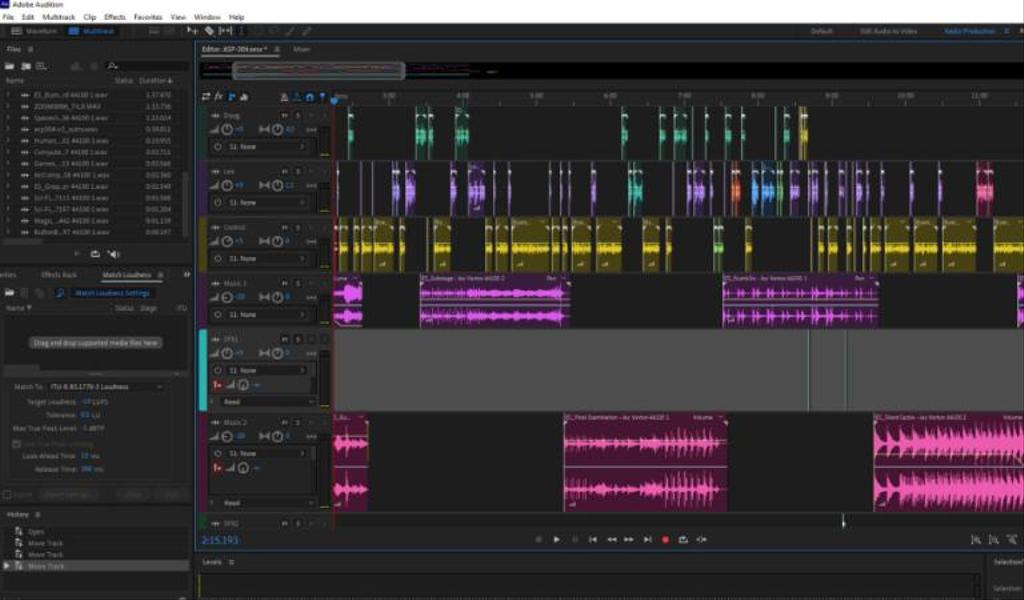
Creative Cloud users may have access to Adobe Audition, which is a professional DAW offering traditional audio editing tools. You won’t be able to edit your audio via transcripts, but you’ll still have the essentials for editing podcast audio (like EQ adjusters and sound effects).
You should know Adobe Audition is more expensive than Descript since you have to pay for Creative Cloud (starting at $59.99 monthly). You also won’t have access to AI tools for your podcast—and if you’re unfamiliar with general audio editing, this could be a major limitation.
This guide to Adobe Audition provides more of the specifics.
REAPER
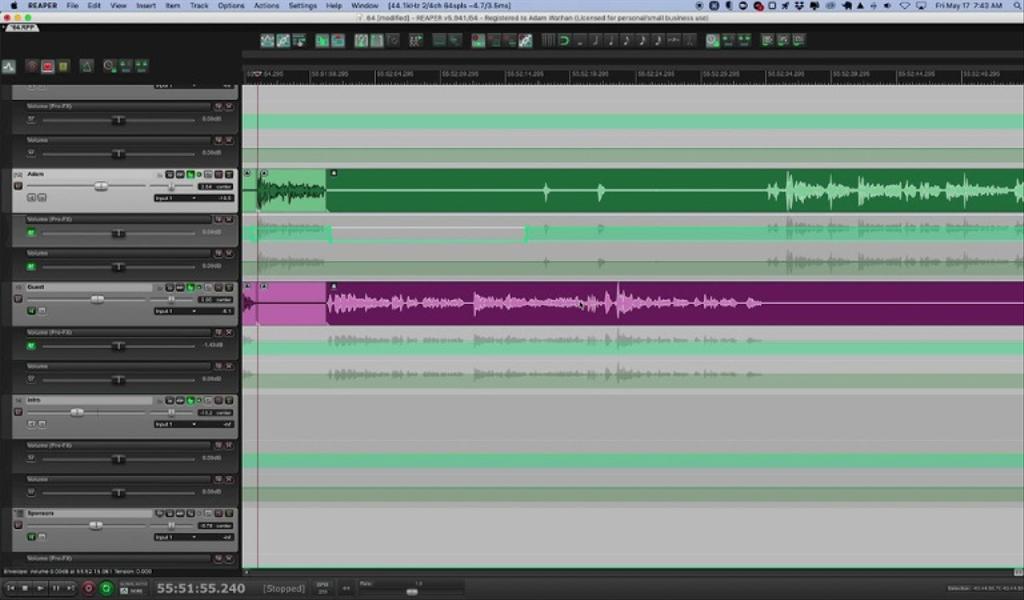
REAPER is one of the best audio production studios for podcasters on a budget. For a one-time fee of $60, you’ll unlock a customizable digital audio workstation for Mac, Windows, and Linux.
REAPER thrives on third-party plugins (unlike Descript). While the platform itself doesn’t come with AI features, you can download AI-like plugins — like Balancer and EZmix—that offer similar effects for your audio.
We wrote a full guide that explores the Reaper DAW.
GarageBand

GarageBand is the free podcast editing alternative to Apple’s premium DAW (known as Logic Pro). Most Mac laptops come with GarageBand already installed, which means you can edit your audio even while offline.
You won’t have access to podcast AI tools through GarageBand, but similar to REAPER, you can download third-party plugins. You’ll also have access to Apple Loops and virtual instruments, which are features you can’t get on any Descript plan.
Get the full scoop on GarageBand in our complete guide.
The Bottom Line on Descript
Descript is a powerful editing tool for any podcaster interested in AI. It may not offer the granularity of a professional DAW, but it’s still a convenient—if expensive—solution for generating clips, social media assets, and more.
If you’re looking for a simpler way to edit, produce, and promote your podcast, it may be easier to explore professional podcast editing services, or partner with The Podcast Consultant. We help dozens of clients upgrade from audio to video, launch new podcasts, and edit high-quality episodes.
Could TPC be the podcast partner you need? Schedule a half-hour discovery call so we can discuss your needs together.
Frequently Asked Questions
Is Descript good for podcast editing?
Descript podcast editing works well for beginners and intermediate podcasters who want a straightforward, text-based workflow. You can edit audio by deleting words from a transcript, use AI tools to clean up sound, and even handle video in the same platform. It’s less suited for professional audio engineers who rely on third-party plugins or a traditional DAW.
How does text-based editing work in Descript?
When you upload a recording, Descript automatically generates a transcript of your audio. You can then edit the episode by deleting or rearranging text, and the audio follows along. This makes it easy to cut filler words, fix repeated lines, or tighten up awkward pauses without touching a waveform.
What AI features does Descript offer for podcasters?
Descript includes a range of AI tools under its Underlord feature, such as automatic filler word removal, Studio Sound for cleaning up audio, and AI Speech for cloning your voice to fix mispronounced words. You can also generate social media clips, translate captions into multiple languages, and apply a virtual green screen background. Some of these tools are available even on the free plan.
How much does Descript cost for podcasting?
Descript offers a free plan with limited transcription and AI usage, while paid plans start at $12 per user per month for the Hobbyist tier. The Creator plan at $24 per user per month is the go-to option for active podcasters, offering 30 transcription hours and 120 minutes of AI speech. Costs can add up quickly for teams, especially at the Business level.
What are the biggest limitations of Descript podcasting?
Descript doesn’t support third-party audio plugins like FabFilter or iZotope, which limits its appeal to podcasters who want professional-grade audio processing. Exporting can also be slow, and moving projects into a traditional DAW isn’t straightforward. Customer support has received mixed reviews, with slow response times unless you’re on the Business plan.
Can you record podcast guests remotely through Descript?
Yes, Descript has a built-in remote recording tool that lets you record with up to 10 guests directly in the platform. It records locally on each person’s device to reduce the impact of slow internet connections, and you can capture audio and video in up to 4K quality depending on your plan. For teams that need more advanced remote recording features, pairing Descript with a dedicated tool like Riverside is a common workaround.
Does Descript work for video podcast editing too?
Descript includes basic video editing tools built right into the platform, which is uncommon among podcast editors. You can add captions, create transitions, animate layers, and generate short social media clips using AI. It’s not as powerful as a dedicated video editor, but it covers the essentials for standard podcast video workflows.
What are the best alternatives to Descript for podcast editing?
If you want more transcription hours at a lower price, Hindenburg PRO is worth considering. Adobe Audition suits podcasters who need professional DAW features and already pay for Creative Cloud. For AI-powered audio cleanup without a full editing suite, Adobe Podcast AI and Enhance is a free option still in beta.