
Adobe’s AI tools for podcasting launched in 2022 and have grown quickly since. AI podcast editing software has become a crowded category, and browser-based platforms like Adobe Podcast are part of that shift.
Picking the right podcast editing software takes research. This guide covers the Adobe Podcast AI suite: what it is, how to use each tool, what it does best, and where it falls short. It also covers alternatives if Adobe doesn’t meet your needs.
Table of Contents
- Podcasts and AI: Does It Make Sense?
- What are Adobe’s Podcast AI Tools?
- What Do Adobe’s AI Tools Cost?
- When Should You Use Adobe Podcast?
- What Are the Best Alternatives to Adobe’s Podcast Enhancer Tools?
- The Bottom Line on Adobe Podcast AI Enhancer
- Frequently Asked Questions About Adobe Podcast Enhancer Tools
- What are the two Adobe Podcast AI tools and their main differences?
- Is Adobe Podcast AI free to use in 2026?
- How does Adobe Podcast AI compare to hiring a professional podcast editor?
- What are the main limitations of Adobe Podcast AI’s free tier?
- Can Adobe Podcast AI tools handle multi-speaker recordings?
- How does Adobe Podcast compare to Descript for podcast editing?
Podcasts and AI: Does It Make Sense?
Adobe Podcast AI tools automate audio cleanup tasks like noise removal and microphone compensation, lowering the barrier for new podcasters, but cannot replace a trained audio engineer on complex recordings.
The main practical benefit is automating repetitive tasks. AI-powered audio cleanup reduces the friction of remote recording: it can reduce background noise and compensate for lower-quality microphones, which matters when you’re working with guests who aren’t in a studio. Adobe Podcast Enhance is particularly useful in these situations, letting you clean up a usable file without opening a traditional DAW (digital audio workstation, the software engineers use to edit audio).
That said, Adobe’s AI tools for podcasters can’t replace a trained audio engineer. More complex work requires a trained ear, which is why it’s best left to podcast production companies.
Here are recent reviews of Adobe Podcast Enhancer tools:
- “I tried it and thought it made me sound like AI.” — Reddit
- “If you want a more natural and true-to-the-source sound, you need to use stuff like Acon DeVerberate and voice isolate or the equivalents from iZotope.” — Gearspace
- “It ends up making your voice sound robotic, like you are a bad text-to-speech voice. It no longer sounds natural.” — YouTube
“TPC is always able to turn around our recordings quickly, helping us address any issues with background noise or uploads and making our podcast sound like the real deal.”
– Laasya Shekaran, LCP
What are Adobe’s Podcast AI Tools?
Adobe Podcast offers two specific AI tools:
- Enhance Speech
- Studio
Below is a closer look at both.
1. Adobe Podcast Enhance Speech

Adobe’s Podcast Enhance Speech is a browser-based AI tool that removes background noise and improves voice clarity in most audio recordings. It uses machine learning algorithms trained on thousands of audio samples to distinguish between human speech and background noise.
When you upload a file, the AI maps the frequency spectrum of your recording, identifies patterns consistent with voice, and applies targeted processing to reduce everything else.
Next, the algorithm identifies the base frequencies of each speaker’s voice. It analyzes the noise profile, meaning the consistent background sound present throughout the entire recording. Finally, it applies spectral subtraction and other techniques to reduce noise while preserving vocal characteristics.
Processing typically completes within 10 minutes, depending on file size and server load. The tool outputs enhanced audio as a .wav file, which you can convert to your preferred format for podcast production and distribution.
Getting started with Adobe Podcast Enhance requires only a free Adobe account.
To use Adobe Podcast Enhance:
- Navigate to podcast.adobe.com/enhance (and if you don’t have an Adobe account, create one).
- Upload an audio file into the selection box (this could be .wav, .mp3, .aac, .flac, .ogg, .oga, or .m4a).
- Ensure your audio file is less than 500 MB and under 30 minutes long.
- Click ‘enhance’ (some files take up to 10 minutes to process).
- Listen to your enhanced audio recording (or switch between the enhanced and unenhanced versions to compare quality).
- If you’re happy with the quality, click ‘download’ to obtain the enhanced file (as a .wav).
- Repeat the process for additional files, keeping in mind the free tier’s daily limit of one hour of total processing time.

2. Adobe Podcast Studio

With Adobe Podcast Studio, you can transcribe your audio, capture 16-bit 48k tracks, and add royalty-free music to complete your podcast. It can also help with remote recordings for your show, since you can record directly from your browser.
Podcasters without DAW experience benefit from the tool’s simplicity. If learning Audacity or Adobe Audition feels overwhelming, Enhance Speech delivers professional results without technical knowledge.
Adobe’s Podcast Studio also comes with other AI features like:
- AI background music removal
- AI captions for social media clips
- AI transcriptions for audio and video

That said, Adobe’s remote interview recordings are known to suffer from inconsistent audio quality when guests record in untreated rooms or use consumer-grade microphones. Enhance Speech may be able to help salvage otherwise unusable audio by reducing room echo and background noise.
For the broader picture of where podcast AI tools still fall short, see our guide to what podcast AI software can and can’t do.
What Do Adobe’s AI Tools Cost?
Adobe’s AI podcast tools are free for files up to 30 minutes and one hour of daily processing. The Premium plan costs $19.99 per month (around $240 per year) and adds batch uploads, video support, and higher processing limits.
Whether Premium is worth it depends on your publishing cadence. If you publish weekly audio or video podcasts, it’s likely a worthwhile investment. If your schedule is irregular or your episodes run under 30 minutes each, the free plan may be sufficient.
| Feature | Free | Premium |
|---|---|---|
| Max file length | 30 minutes or 500 MB | 2 hours or 1 GB |
| Daily limit | 1 hour per day | 4 hours per day |
| Batch uploads | No | Yes |
| Video file support | No | Yes |
| Enhancement strength control | No | Yes |
| Mic Check | Full access | Full access |
| Studio downloads | 2 per day; 30 min each | Unlimited |
| 30-day free trial | No | Yes |
Check out our in-depth article on podcast analytics to learn more about the benefits of creating a consistent release schedule for your podcast.
When Should You Use Adobe Podcast?
Adobe Podcast is best suited for new podcasters who want browser-based editing without installing traditional DAW software. It’s a reasonable fit for occasional recordings in non-studio environments but falls short for regular publishers recording episodes longer than 30 minutes, those who can’t wait for a Studio invitation, or anyone who needs precise hands-on control.
Adobe’s AI tools suit anyone who isn’t familiar with traditional DAWs (digital audio workstations) such as Reaper. You can edit podcasts directly from your browser, with no need to pay for or install large editing programs.
Adobe Podcast is a reasonable fit if you’re new to podcasting, you’re not recording in a dedicated studio, or you’re working with a tight budget. Longer episodes, hands-on editing requirements, and multi-speaker recordings are where the tools’ limits become apparent. If those factors apply to your show, the alternatives below are worth reviewing.
- Adobe Podcast AI Tools: Everything You Need to Know — Full breakdown of Mic Check, Studio, and Enhance Speech
- Adobe Audition Review for Podcasters — When to upgrade from Enhance to a full DAW
- Descript for Podcast Editing — How Studio Sound compares to Adobe Enhance
- Hindenburg PRO Review — Spoken-word-focused alternative
- GarageBand for Podcasters — Free Mac option with built-in enhancement
- The Ultimate Guide to Podcast Editing Software — Compare all major DAWs
- Is REAPER the Best Podcast DAW? — Budget-friendly professional option
- Cloud Recording 101 — Pairs with Adobe Podcast Studio for remote sessions
What Are the Best Alternatives to Adobe’s Podcast Enhancer Tools?
Adobe’s AI podcast tools are a reasonable starting point, but they may not scale well as your show grows. Here are a few alternatives to consider.
If you want to learn more, our full comparison of AI podcast editing software breaks down how they stack up side by side.
Adobe Audition

Adobe Audition is a traditional DAW (digital audio workstation) you can use to enhance audio files. Unlike Adobe Podcast Enhance, it isn’t free. It does include tools to remove background noise and enhance speech, and it can automatically repair damaged files. It’s the better fit for users who need more precise control, though it carries a steeper learning curve if you’re new to audio software.
Learn more about Adobe Audition in our user guide.
Audacity
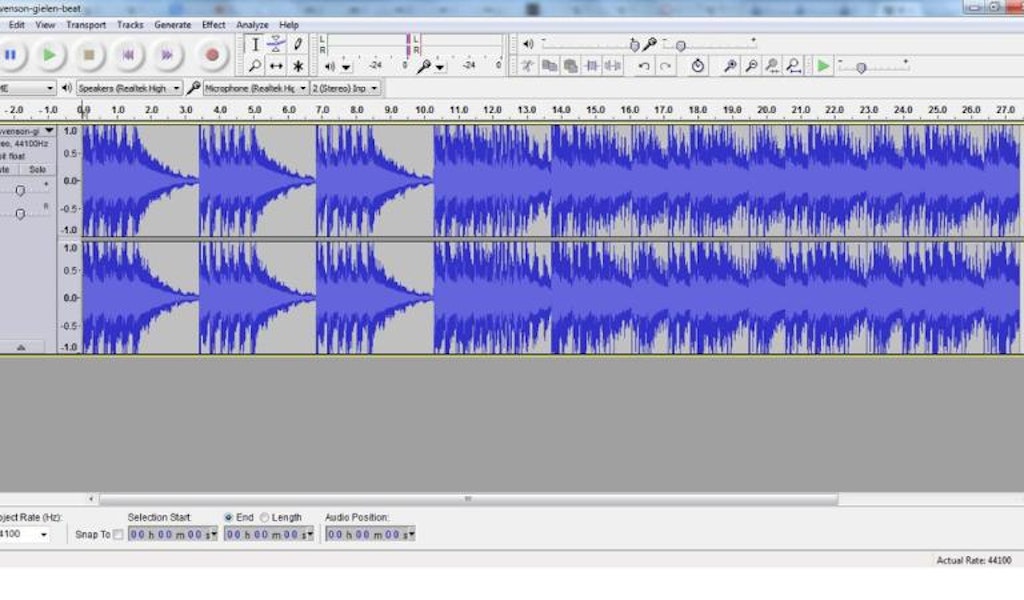
Audacity is an open-source DAW for experienced audio engineers. It’s compatible with all major operating systems (including Windows, MacOS and Linux) and integrates with hundreds of third-party plugins, including some for enhancing audio.
Some of the most popular AI plugins you can use to enhance speech in Audacity are Noise Suppression, NVIDIA Broadcast, and Whisper Transcription. There’s also plugin support for experienced editors who want to use tools like Nyquist (for sound synthesis) or Muse FX (for chorus, reverb, and more).
Just FYI: Audacity is more complex than Adobe Podcast Enhance, so expect a learning curve before you get consistent results.
Descript Podcast Software
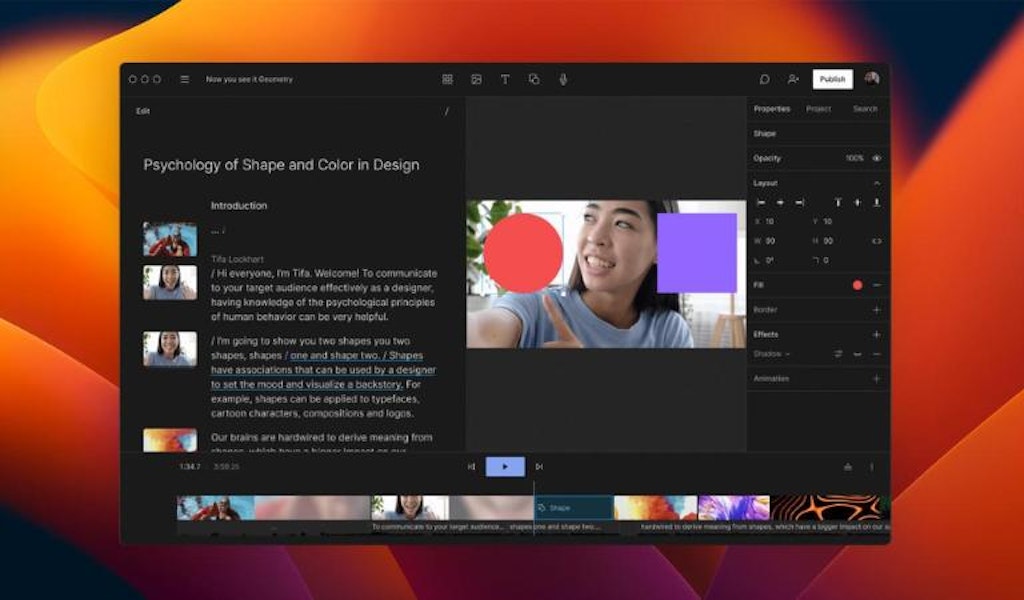
Descript offers podcast editing software with support for audio enhancement. There are two different tools you can use: the Free Voice Enhancer, or Studio Sound.
You can use Descript’s free plan to enhance podcast audio, although your options are limited. If you want to edit audio more than 10 minutes long, you need to upgrade to the next tier up (starting at $16 per user per month).
Our guide provides a full breakdown of Descript’s tools.
iZotope RX Suite

The iZotope RX Suite is the professional standard for audio repair. It handles deverbing, denoising, declipping, and other cleanup tasks that AI tools like Enhance Speech can’t manage cleanly. It’s the go-to bundle for podcast engineers who need precise, natural-sounding results on complex recordings.
GarageBand Podcast Software

There’s a good chance you recognize the name ‘GarageBand’ — this legacy macOS tool debuted as early as 2004. Since then, GarageBand has developed into a globally recognized solution for musicians and podcasters around the world.
GarageBand offers all the basics you need to get started, like audio effect plug-ins, visual EQ, and compression tools. It’s also 100% free like Adobe Podcast: Enhance so you don’t need to spend extra on a DAW.
GarageBand requires macOS, iOS, or iPadOS. If you don’t own an Apple computer, tablet, or phone, you may need to look for a podcast editing alternative.
You can learn more about GarageBand in our complete breakdown.
Hindenburg PRO
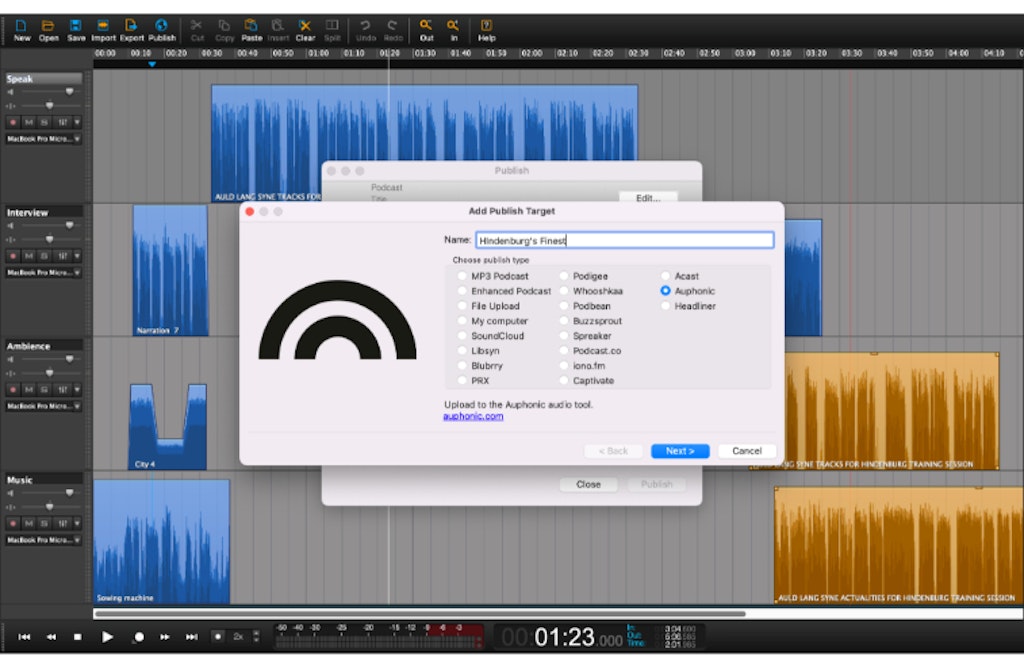
Hindenburg PRO is an audio editor specifically for the spoken word. It’s primarily used for audiobooks and narration, although it’s also a favorite among B2B podcasters. You won’t get any AI tools with Hindenburg PRO, but you can still edit audio from a transcript like Adobe Podcast. It also offers video support if you’re publishing to distribution platforms like YouTube.
The drawbacks? Some users feel Hindenburg PRO isn’t a fit for granular editing, but this largely depends on your workflow and use case. There’s a 30-day free trial available so you can test it for yourself.
Check out our full guide to the Hindenburg PRO here.
The Bottom Line on Adobe Podcast AI Enhancer
Adobe Podcast AI tools are worth it for basic noise removal and mic setup checks, especially for new or occasional podcasters. They fall short for complex edits, long files, multi-speaker recordings, and anything beyond audio cleanup.
Adobe AI tools are a useful entry point for podcasters who need basic browser-based audio cleanup without traditional DAW software. Even so, complex edits, longer files, and multi-speaker recordings still require professional production support.
That said, AI tools aren’t a silver bullet for successful podcasts. Complex edits require the work of a professional podcast editor. Podcast AI also can’t audit, promote, market, or publish your podcast on hosting platforms. The Podcast Consultant can handle all of that to produce a business podcast
“I’m amazed with how TPC uses AI to handle episodes where I’m using the Zoom file instead of my microphone because of some sort of issue.”
— Steve Curley, Investors First Podcast (CFA Orlando / 55 North Private Wealth)
We are a full-service podcast production company serving both new and established podcasts. We offer a holistic approach to podcasting so you can spend more time creating and less time editing. You can rely on The Podcast Consultant to handle your new podcast launch, publishing, and more.
If you’d like to learn more about our approach to podcast production, or if you’re interested in past case studies for our clients, we invite you to book a discovery call today.

Frequently Asked Questions About Adobe Podcast Enhancer Tools
What are the two Adobe Podcast AI tools and their main differences?
Adobe Podcast AI includes two distinct tools:
- Enhance Speech removes background noise and improves voice clarity in pre-recorded files
- Studio enables browser-based recording with remote guests
Adobe Podcast’s AI Studio also includes tools like AI Captions, which turns your podcast audio into text for applications like social media, and AI background music removal, which can help you avoid issues like copyright disputes.
Is Adobe Podcast AI free to use in 2026?
Adobe Podcast offers free access to all three tools with limitations. The Premium plan ($19.99/month or $240/year) extends Enhance Speech to four hours of daily processing with files up to two hours and 1GB, adds batch uploads and video support, and removes Studio download limits.
If your episodes run under 30 minutes and you publish weekly or less frequently, the free tier likely meets your needs. Regular publishers, video podcasters, and anyone working with longer recordings will benefit from Premium’s expanded limits and batch processing capabilities.
How does Adobe Podcast AI compare to hiring a professional podcast editor?
Adobe Podcast AI provides one-click enhancement ideal for beginners and occasional podcasters, while professional editors offer nuanced audio treatment, compliance review, and strategic content guidance. For a closer look at where that line falls, see our breakdown of whether AI can replace your podcast production team.
What are the main limitations of Adobe Podcast AI’s free tier?
Free tier constraints include Enhance Speech limited to one-hour daily processing with 30-minute maximum file length, limiting downloads to two projects daily, no batch processing for multiple files, no video format support, and no adjustment controls for enhancement strength.
Can Adobe Podcast AI tools handle multi-speaker recordings?
Adobe’s AI tools have a known limitation with multi-speaker audio. Enhance Speech can’t reliably distinguish between the primary speaker and voice bleed from other participants. When both voices are present on the same track, the algorithm produces strange artifacts or audio that sounds distorted. For multi-speaker recordings, track separation at the recording stage, using tools like Riverside, Squadcast, or a local DAW with separate tracks, produces far better results than AI cleanup after the fact.
How does Adobe Podcast compare to Descript for podcast editing?
Adobe Podcast and Descript overlap in audio enhancement and transcript-based editing, but serve different workflows. Adobe Podcast’s strength is frictionless browser-based cleanup: drop in an audio file, click enhance, and you’re done. Descript is the better fit for podcasters who edit primarily by cutting transcript text, want AI voice cloning or text-to-speech, or need green screen for video.